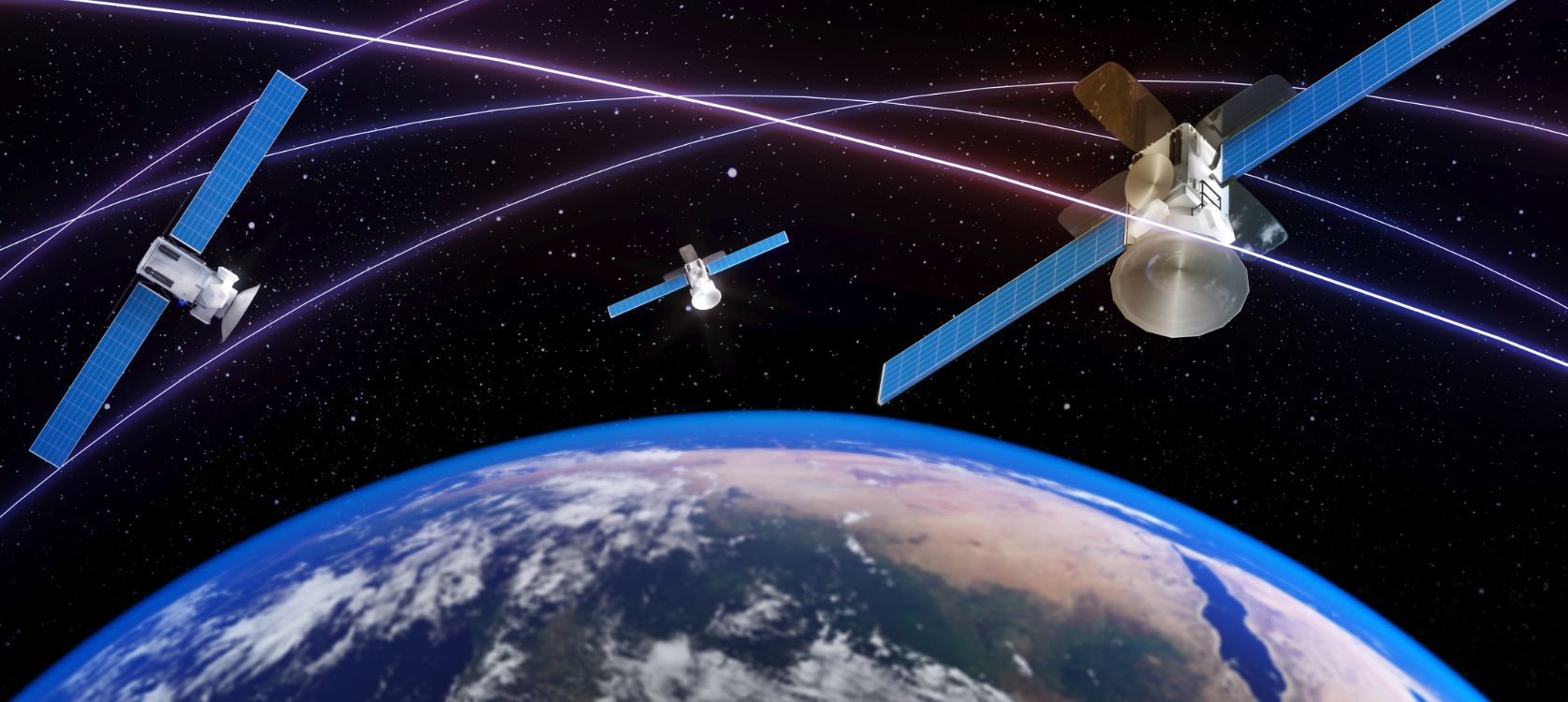
In this interview, John Stih, Sensor Specialist at Future Electronics, explores the shifts in modern asset tracking system design. From mitigating common architectural oversights and balancing tight power budgets to leveraging Edge AI and advanced sensor modalities like radar and 3D time-of-flight, Stih outlines how intelligent edge processing is changing how we approach data payloads, system reliability, and overall operational efficiency.
Jump to:
- Q: What is the most common oversight engineering teams make when designing modern asset tracking solutions?
- Q: What are the foundational questions needed to advise customers on asset tracking deployment?
- Q: How are edge computing and localized algorithms shifting the balance between data fidelity and power consumption?
- Q: Which emerging sensor technologies are playing a critical role in next-generation asset tracking designs?
- Q: Do modern tracking solutions require higher sensor density, or is the industry moving toward smarter analytics on existing hardware?
- Q: What engineering strategies can teams implement to improve system reliability while curbing overall cost?
- Key Takeaways
- Contact

John Stih is the Technical Business Development Manager for Sensors across North America and Brazil at Future Electronics, overseeing a portfolio of 30+ sensor product lines. He specializes in driving market adoption for image sensors and compact camera modules across IoT, machine vision, and embedded vision applications. Experienced in both technical architectures and business development, John collaborates with Field Application Engineers, Regional Sales Managers, and specialized groups (FIS and FCS) to guide complex customer designs from initial concept to full-scale production.
Q: What is the most common oversight engineering teams make when designing modern asset tracking solutions?
John Stih:
Asset tracking is fundamentally a three-part architecture:
- Sensors: Acquiring environmental and physical metrics at the edge.
- Wireless Connectivity: Transmitting data from sensor nodes to gateways or access points.
- Cloud Infrastructure: Managing, processing, and presenting end-user data.
The most common mistake is focusing exclusively on the sensor selection while overlooking the broader architecture.
System integration missteps can occur at any stage, and a successful design requires evaluating potential bottlenecks and failure points across all three domains simultaneously.
Q: What are the foundational questions needed to advise customers on asset tracking deployment?
John Stih:
To define the ideal system architecture, we start by evaluating two critical parameters:
- Deployment Scope
Are we dealing with:
- Local Implementations? (Warehouses, localized industrial facilities, active construction sites, etc.)
- Regional Networks? (Overland freight, train cargo carriers, regional logistics corridors, etc.)
- Global Infrastructure? (International shipping routes, intermodal cargo container monitoring, global cargo, etc.)
Defining the geographic and physical environment dictates both sensor selection and the appropriate wireless connectivity strategy.
- Power Availability
Power constraints directly govern system capability and dictate necessary engineering trade-offs:
- Mains-Powered Applications: Offer greater architectural freedom for high-frequency sampling and continuous transmission.
- Battery-Powered Deployments: Require aggressive system optimization.
When operating under tight energy budgets, design teams must strictly evaluate desired feature sets versus baseline system requirements to balance functional scope against battery longevity.
Q: How are edge computing and localized algorithms shifting the balance between data fidelity and power consumption?
John Stih:
Traditionally, asset tracking relied on edge sensors streaming raw data across wireless links, often requiring costly cellular connections to transmit full datasets directly to the cloud for processing.
The integration of edge AI, machine learning libraries, and localized algorithms directly on the sensor node is transforming this dynamic.
Edge-Level Inference
Rather than executing algorithms on a central application processor, processing takes place directly within the intelligent sensor:
- Payload Reduction: Local models analyze raw data streams on-chip and isolate specific events, converting continuous metrics into small, actionable flags.
- Power Optimization: Eliminating continuous raw data transmission significantly cuts current draw across both the sensor node and the wireless transceiver.
- Network Efficiency: Lowering data bandwidth reduces overall transmission overhead from the edge to the node and up to the cloud.
Q: Which emerging sensor technologies are playing a critical role in next-generation asset tracking designs?
John Stih:
I think the defining advancement in modern asset tracking is not necessarily new sensor modalities, but the integration of embedded processing capabilities directly at the edge.
Advanced processors can now host machine learning models directly on the sensor module to derive actionable intelligence before any RF transmission takes place.
Advanced Sensor Modalities
Technologies that previously generated prohibitive amounts of raw data are now highly viable for low-power edge applications:
- 3D Time-of-Flight (ToF): Enables localized spatial awareness to distinguish objects, analyze volume, verify container occupancy, or identify intrusion events (such as unauthorized door openings) without transmitting high-bandwidth image files.
- Radar Systems: Delivers precise motion and presence detection, determining whether individuals are walking or running, or detecting structural state changes.
By performing object classification and state evaluation locally, these sensors send simple diagnostic flags rather than heavy data payloads, optimizing system energy consumption.
Q: How are evolving price points and hardware architectures reshaping future asset tracking capabilities?
John Stih:
With hardware costs dropping and edge AI maturing alongside better mechanical packaging, the baseline capabilities of asset tracking are shifting almost quarterly.
Cost Parity Across Modalities
Sensors with historically high cost barriers are reaching price parity with conventional alternatives. For instance, integrated radar solutions now compete directly with thermal arrays and optical time-of-flight sensors. Depending on mechanical packaging constraints, radar often provides a more robust and practical integration path.
Micro-Vision at the Edge
High-capability edge tracking does not always demand complex, high-cost sensor arrays. Customers can now combine a low-cost camera module and image sensor with a modest 600 MHz processor hosting a light inference engine. This provides a simplified setup that can execute complex visual determinations locally at a significantly lower cost compared to legacy vision platforms.
Q: Do modern tracking solutions require higher sensor density, or is the industry moving toward smarter analytics on existing hardware?
John Stih:
The industry is achieving superior functionality by embedding smarter analytics into existing sensor footprints rather than increasing the number of physical sensors in an application.
Upgrading the Edge Architecture
Comparing legacy components with modern architectures highlights this evolution:
- Legacy Implementations: Standard MEMS accelerometers gathered simple motion or vibration data and streamed raw values directly to an external host processor.
- Modern Implementations: Current-generation MEMS sensors feature integrated onboard processing capabilities.
Using the same baseline physical architecture, modern integrated sensors can evaluate complex failure mechanisms, analyze fluid/airflow patterns, and detect subtle orientation changes autonomously, executing localized machine learning models directly on the sensor chip.
Q: What engineering strategies can teams implement to improve system reliability while curbing overall cost?
John Stih:
Cost reduction in asset tracking spans both bill-of-materials (BOM) optimization and ongoing operational expenditures linked to data transport and energy management.
Minimizing Data Payloads
Reducing the data payload sent from edge sensors to the central node or gateway provides compounding system benefits:
- Power & Battery Footprint: Lowering transmission cycles drastically reduces energy consumption, enabling longer operational lifespans or the use of smaller, lower-cost batteries.
- Cellular Bandwidth Costs: For remote stations operating on cellular modems, minimizing the payload cuts recurring data plan expenses.
- System Longevity: Lowering active transmission duty cycles reduces heat and component strain, extending overall hardware reliability.
By prioritizing edge processing and transmitting only critical event triggers, engineering teams can build reliable, high-performance tracking systems that minimize hardware and deployment costs.
Key Takeaways
- Evaluate the Full Architecture: Asset tracking requires balancing sensors, wireless connectivity, and cloud infrastructure simultaneously. A bottleneck at any stage impacts the entire system.
- Process at the Edge: Executing machine learning algorithms directly on the sensor drastically reduces transmission payloads, cutting both power consumption and cellular data costs.
- Leverage Existing Footprints: Smarter analytics allow legacy sensor types (like MEMS accelerometers) to provide advanced diagnostic insights without increasing hardware density.
Contact
Contact our engineers for more insights on integrating smart sensors and Edge AI into your industrial designs.